Published by Drug Driving Solicitors — specialist defence solicitors for drug driving charges throughout England and Wales.
7 Legal Steps After Failing a Roadside Drug Test in the UK
Failing a roadside drug test is a disorienting experience. Within moments, an ordinary journey can become the beginning of a formal criminal process, and most people have little idea what to expect in the hours, weeks, and months that follow. Understanding each stage of that process can help you make informed decisions, protect your position, and avoid the kind of missteps that can make a difficult situation significantly worse.
This guide walks through the seven key legal stages that follow a positive roadside screening result in England and Wales. Each step is explained in plain terms, with enough procedural detail to give you a genuine picture of what is happening and why. Whether you are going through this process now or simply want to be prepared, the information below will help you understand exactly where you stand.
1. A Healthcare Professional Collects a Blood Sample
Once you have been taken into custody, the process of obtaining forensic evidence begins in earnest. The roadside swab result is only a screening tool; it cannot be used as standalone evidence of a drug driving offence. The definitive evidence comes from a blood sample, and that sample must be collected in a controlled and legally compliant manner.
Who Takes the Sample and Where
The blood draw must be carried out by a healthcare professional, typically a forensic medical examiner, a custody nurse, or a similarly qualified practitioner. It cannot be taken by a police officer. This requirement exists to ensure that the procedure meets medical standards and that the sample is collected safely and without contamination.
- The healthcare professional will assess your fitness to be detained before proceeding
- They will confirm you have no medical conditions that would make a blood draw unsafe
- The procedure takes place in a designated medical room within the custody suite
- You will be asked to confirm your identity before the sample is taken
The Two-Part Sample Process
One of the most important procedural protections in drug driving cases is the requirement to split the blood sample into two parts. One part is retained by the police and sent for laboratory analysis. The other is offered to you. If you choose to accept your portion, you can have it independently analysed, which gives you the ability to challenge the police laboratory's findings if necessary.
- You will be offered your portion of the sample in a sealed container
- You have the right to arrange independent analysis at your own cost
- Accepting your part of the sample is almost always advisable
- A solicitor can assist you in arranging an accredited independent laboratory
What Happens if You Refuse
Declining to provide a blood sample is not a neutral act. Under Section 7A of the Road Traffic Act 1988, refusing without a reasonable excuse is a criminal offence in its own right, carrying penalties that are broadly equivalent to a drug driving conviction. The threshold for what constitutes a reasonable excuse is very narrow, and a medical reason must be supported by evidence. If you have any concerns about the procedure, speak to a solicitor before making any decision.
- Refusal can result in prosecution regardless of whether drugs were actually in your system
- A needle phobia alone is unlikely to be accepted as a reasonable excuse without supporting evidence
- The custody sergeant will usually remind you of the consequences of refusal
- Legal advice at this stage can prevent a costly and avoidable secondary offence
2. The Officer Gives You a Statutory Warning
Before requiring you to provide a sample from the roadside screening device, the officer must first administer what is known as a statutory warning. This is not a formality to be skimmed over; it is a legal precondition, and failure to administer it correctly can have significant consequences for the prosecution's case.
What the Warning Contains
The statutory warning is a prescribed form of words that informs you of the requirement to provide a specimen and of the consequences of failing or refusing to do so. The officer must make clear that failure to provide a sample without reasonable excuse is itself an offence. The exact wording matters, and courts have considered cases where the warning was deficient or misleading.
- The warning must be given before the swab is requested, not after
- Officers are trained to follow a set script to ensure compliance
- You are entitled to have the warning repeated if you did not understand it
- The warning is typically captured on the officer's body-worn camera
Your Rights at This Stage
Receiving a statutory warning does not mean you are being arrested or that an offence has already been established. It is simply the formal gateway to the screening process. You are entitled to ask the officer to clarify anything you do not understand, and you should not feel pressured into acting hastily. Remaining calm and cooperative is generally in your best interest at this point.
- You do not have the right to wait for a solicitor before providing the roadside swab
- You can ask the officer to explain the process, but you cannot delay it unreasonably
- Note the time, location, and the officer's details for your own records if possible
- Anything you say at this stage may be relevant to any subsequent proceedings
Why This Step Can Be Legally Significant
The statutory warning stage is one of the most commonly scrutinised points in a drug driving case. If a solicitor later reviews your case, the administration of the warning will be among the first things examined. A defect at this stage does not automatically end the prosecution, but it can form the basis of a procedural challenge that undermines the admissibility of the evidence that follows.
- Errors in the warning have successfully challenged prosecutions in the past
- Body-worn camera footage is routinely requested as part of the disclosure process
- Specialist solicitors know exactly what to look for when reviewing this stage
- The strength of any challenge depends on the nature and extent of the deficiency
3. Your Case Is Presented at the Magistrates' Court
The vast majority of drug driving cases in England and Wales are dealt with in the Magistrates' Court. If you have been charged, you will receive a summons or be required to appear on a specified date. The court process can feel intimidating, but understanding what to expect makes it considerably more manageable.
First Hearing and Entering a Plea
At your first hearing, you will be asked to enter a plea of guilty or not guilty. This is one of the most consequential decisions in the entire process, and it should not be made without specialist legal advice. If you plead guilty, the court will usually proceed to sentencing, either on the same day or at a subsequent hearing. If you plead not guilty, the case will be listed for trial.
- You are entitled to legal representation at every stage of the court process
- Pleading guilty at the earliest opportunity typically results in a reduced sentence
- A not guilty plea will require the prosecution to prove its case beyond reasonable doubt
- Your solicitor can advise you on the realistic prospects of a successful defence
Sentencing and the Mandatory Disqualification
Drug driving under Section 5A of the Road Traffic Act 1988 carries a mandatory minimum disqualification of 12 months. The court also has the power to impose a fine, a community order, or a custodial sentence depending on the circumstances. The level of disqualification can be increased if there are aggravating factors, such as a previous drug driving conviction within the last 10 years.
- A second drug driving offence within 10 years triggers a mandatory 3-year ban
- The court may offer a drink-drive rehabilitation course to reduce the disqualification period
- Fines are calculated by reference to your weekly income
- A conviction will result in a DG10 endorsement on your driving licence for 11 years
What a Specialist Solicitor Can Do in Court
Having a solicitor who specialises in drug driving cases rather than a general criminal practitioner can make a genuine difference to the outcome. A specialist will be familiar with the technical evidence, able to cross-examine expert witnesses effectively, and experienced in identifying procedural issues that a generalist might overlook. They will also be able to present mitigation in the most compelling way if a guilty plea is entered.
- Effective mitigation can influence both the length of the ban and the level of any fine
- Technical defences are available in some cases and should always be explored
- A specialist solicitor can also advise on ancillary consequences, such as employment and travel implications
- Early instruction means your solicitor can engage with the prosecution before the first hearing
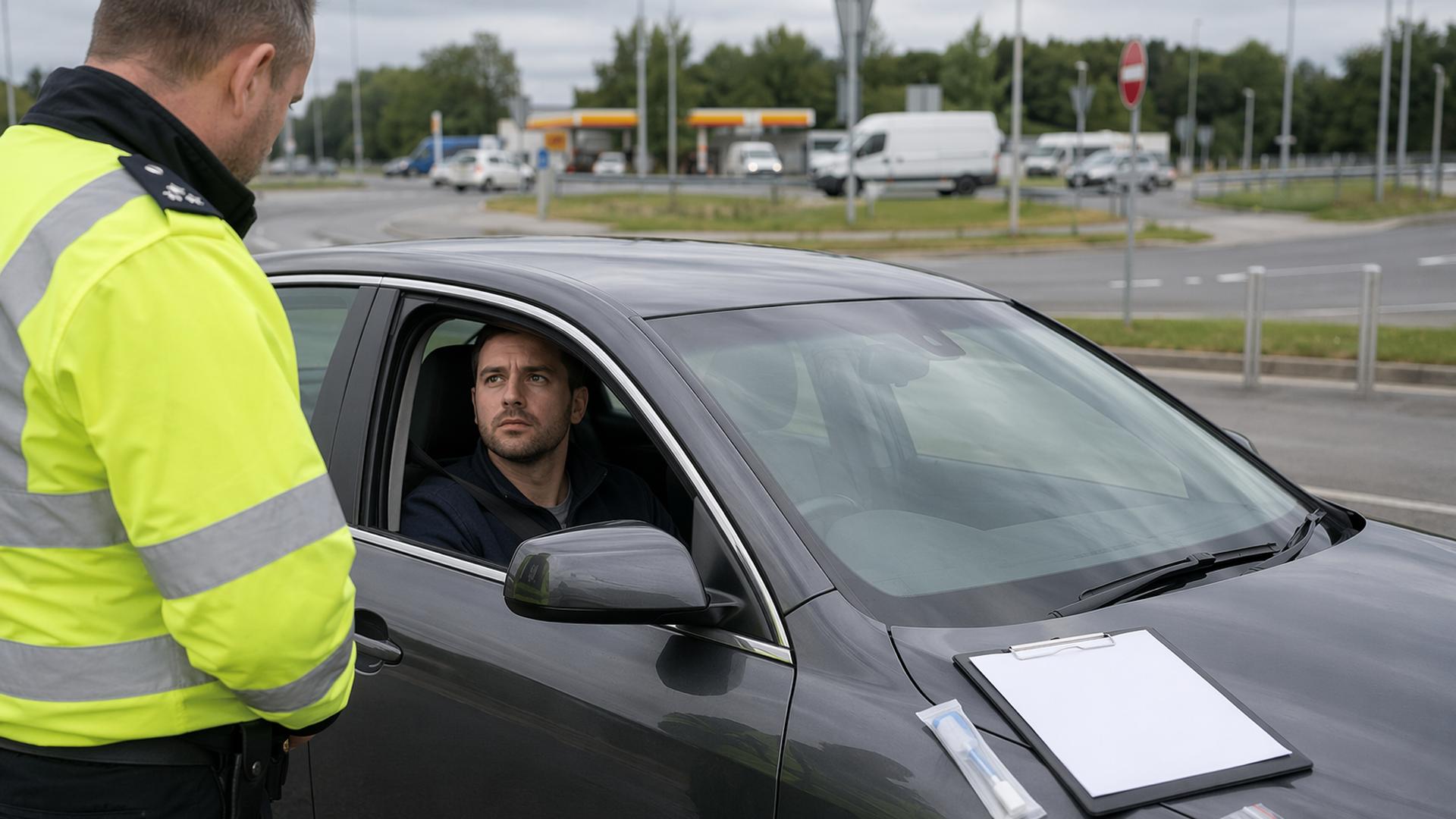
4. The Roadside Device Returns a Positive Result
The process typically begins at the roadside, when a police officer requires you to provide a breath or saliva sample for analysis using an approved screening device. These devices are type-approved for specific substances, and a positive reading indicates the presence of a controlled drug above a detectable threshold. It is worth understanding, from the outset, that a positive screening result is not the same as evidence of a criminal offence.
How the Screening Device Works
Roadside drug testing devices in England and Wales are approved under the Drug Driving (Specified Limits) (England and Wales) Regulations 2014. The devices currently in use typically screen for cannabis and cocaine via a saliva sample, though the list of substances that can be screened for continues to evolve. A positive reading means the device has detected the presence of one or more substances at a level that triggers a response.
- The device does not measure the precise quantity of a drug in your system
- It is a screening tool, not a definitive evidential test
- Officers must use a device that has been type-approved for the drug in question
- The result is recorded and forms part of the officer's contemporaneous notes
What the Officer Does Next
A positive reading gives the officer reasonable grounds to take the matter further. At this point, they will typically inform you of the result and explain that they require you to accompany them, either to a police vehicle or directly to a custody suite, for further investigation. The officer will also begin the process of recording the circumstances of the stop, which will later form part of the prosecution evidence.
- You should remain calm and avoid making any spontaneous statements
- The officer has a duty to act professionally and to follow the prescribed procedure
- You are not required to answer questions beyond providing your name and address
- The stop and search circumstances may be relevant to your case if they were unlawful
Common Misunderstandings at This Stage
Many people assume that a positive roadside result means the case against them is already decided. That is not correct. The screening result is the beginning of a process, not the end of it. There are a number of reasons why a prosecution may not ultimately succeed, and the roadside stage itself can give rise to procedural arguments that a specialist solicitor will examine carefully.
- The device must have been calibrated and maintained in accordance with manufacturer requirements
- The officer must have followed the correct procedure in administering the test
- Environmental factors and certain medical conditions can occasionally affect screening results
- A positive screen that is not followed by a confirmatory blood analysis cannot sustain a conviction
5. Laboratory Analysts Examine the Blood Sample
Once the blood sample has been collected and properly packaged, it is dispatched to a forensic science laboratory for analysis. This is the stage that produces the definitive scientific evidence in a drug driving case, and it is also the stage that introduces the most significant delay in the overall process.
The Chain of Custody
Before any scientific analysis takes place, the integrity of the sample must be established through a documented chain of custody. Every person who handles the sample from the moment it is collected to the moment it is analysed must be recorded. Any gap or irregularity in the chain of custody is potentially significant, because it raises questions about whether the sample analysed is the same one that was taken from the driver.
- The sample is sealed, labelled, and signed at the custody suite
- Transport to the laboratory is documented and tracked
- The laboratory logs the receipt of the sample upon arrival
- Any anomaly in the packaging or sealing can be raised as a ground of challenge
What the Laboratory Measures
The laboratory will analyse the blood sample to determine whether any controlled drugs are present and, if so, at what concentration. The results are compared against the specified limits set out in the Drug Driving (Specified Limits) (England and Wales) Regulations 2014. A finding that a substance is present above the specified limit is the core of the prosecution's scientific case.
- Different drugs have different specified limits, reflecting their pharmacological profiles
- Some limits, such as that for delta-9-tetrahydrocannabinol, are set very low
- The laboratory report will identify the substance found and the exact concentration measured
- A second analysis of the retained sample is possible if the result is disputed
Timescales and What to Expect
Laboratory analysis is not an overnight process. Forces typically use one of a small number of nominated forensic science providers, and those providers handle samples from across the country. Waiting times vary depending on demand, and it is not uncommon for results to take several months to come back. During this period, the investigation is technically live but largely inactive.
- The average wait for laboratory results is typically between two and four months
- Some forces and laboratories are faster than others
- You will not usually be contacted during this period unless there is a development
- Your solicitor can make enquiries with the force if the delay becomes unusually long
6. You Are Placed Under Arrest and Transported to a Custody Suite
A positive roadside screening result gives the officer the power to arrest you on suspicion of a drug driving offence. This is a standard part of the process and does not, in itself, mean that you will be charged or convicted. The arrest takes place to facilitate the collection of evidential samples, which can only be obtained in a controlled custody environment.
What Happens During the Arrest
The officer will formally arrest you, caution you in the standard terms, and explain that you are being taken to a custody suite for further investigation. Your vehicle may be left at the roadside or arranged for recovery, depending on the circumstances. Personal items such as your phone, keys, and wallet will typically be retained and logged upon your arrival at the custody suite.
- You have the right to have someone informed of your arrest
- You have the right to consult with a solicitor, free of charge, before being questioned
- You do not have to answer any questions during the custody process
- The custody sergeant will conduct a risk assessment upon your arrival
Your Rights in Custody
One of the most important things to know about the custody process is that you have an absolute right to free and independent legal advice. This right should be exercised. A solicitor who attends at the custody suite or advises you by telephone can ensure that you do not inadvertently say anything that damages your position, and can begin assessing the strength of the case against you from the very first stage.
- Request a solicitor immediately upon arrival at the custody suite
- Do not discuss the circumstances of the stop with anyone other than your solicitor
- The custody record will document every interaction during your time in detention
- You should be given information about your rights in writing
How Long You Can Be Held
The police can initially detain you for up to 24 hours without charge. In practice, drug driving detentions are rarely that long; the custody process in these cases typically takes a matter of hours once the healthcare professional has attended and the samples have been collected. Once the necessary samples have been obtained, you will usually be released, either under investigation or on police bail, pending the outcome of the laboratory analysis.
- Release under investigation means you leave without conditions but the case remains open
- Police bail may come with conditions, such as a requirement to report back on a set date
- Your driving licence is not automatically surrendered at this stage
- A solicitor can advise you on the practical implications of whichever release route applies
7. A Charging Decision or No Further Action Is Reached
Once the laboratory results have been received and reviewed, the police or Crown Prosecution Service will make a decision about whether to charge you with an offence. This is the pivotal moment in the process, and the outcome will determine whether the matter proceeds to court or comes to an end.
How the Charging Decision Is Made
In most drug driving cases, the charging decision is made by the police using a standard evidential threshold test. For more complex cases, the matter may be referred to the Crown Prosecution Service. The decision-maker will consider whether there is sufficient evidence to provide a realistic prospect of conviction and, if so, whether it is in the public interest to charge. Both limbs of the test must be satisfied.
- The laboratory report is the central piece of evidence in the charging assessment
- The circumstances of the stop and the custody process are also reviewed
- Cases involving prescribed medication may receive closer scrutiny before a decision is made
- You will usually be notified of the decision by post, by telephone, or through your solicitor
No Further Action
A no further action outcome means the police or CPS have decided not to pursue the matter. This can happen for a number of reasons: the laboratory result may have come back below the specified limit; there may have been a procedural deficiency that undermines the evidence; or it may have been determined that prosecution is not in the public interest. A no further action outcome brings the investigation to a close, and no entry is made on your criminal record.
- A no further action decision is not a formal acquittal but is the practical equivalent
- You should receive written confirmation of the outcome
- The arrest record will remain on the Police National Computer but will not appear on a standard DBS check
- If you have been waiting for longer than six months with no update, seek legal advice on your position
What Happens if You Are Charged
If you are charged, you will be required to appear before the Magistrates' Court. You will either be given a summons by post or, less commonly, required to attend a charging appointment at the police station. From this point, the court process begins. How you respond to the charge, and particularly whether you enter a guilty or not guilty plea, will be one of the most significant decisions you make throughout the entire process.
- Instruction of a specialist solicitor before your first court appearance is strongly advisable
- There are strict time limits on disclosing your defence, and early preparation matters
- The prosecution must serve its evidence on you in advance of any trial
- A solicitor can review that evidence and advise you on the most effective way to respond
What to Do if You Are Facing a Drug Driving Charge
Being stopped at the roadside for suspected drug driving sets in motion a process that most people have never encountered before. The seven stages outlined in this article represent a path that moves from a brief encounter on the roadside all the way to a potential court appearance, and each stage presents both risks and opportunities. Understanding the process does not replace professional legal advice, but it does mean you are better placed to make the decisions that will shape your outcome. The single most effective step you can take at any point in this process is to instruct a solicitor who deals with drug driving cases every day and knows exactly what to look for.
Frequently Asked Questions
How Long Does It Take From a Positive Roadside Test to a Charging Decision?
The timeline varies but typically falls somewhere between two and six months, and in some cases longer. The main source of delay is the forensic laboratory analysis of the blood sample, which depends on both the laboratory allocated to the force and its current workload. Once the laboratory report is returned, the charging decision tends to follow relatively promptly. If six months have passed since the incident and you have received no communication, it is worth obtaining specialist legal advice to understand your current position.
What Are the Most Common Reasons Drug Driving Cases Do Not Proceed to Conviction?
The most frequently encountered grounds include failure to administer the statutory warning correctly before requesting the roadside sample; use of a device that was not type-approved for the specific substance in question; irregularities in the chain of custody for the blood sample; failure to offer the driver their portion of the split sample; errors in the laboratory analysis process; and issues with the lawfulness of the initial stop. A specialist solicitor will examine all of these factors as a matter of course rather than focusing solely on the headline blood test result.
What Is a DG10 and How Long Does It Remain on My Licence?
DG10 is the DVLA endorsement code applied to a conviction for driving or attempting to drive with a controlled drug above the specified limit under Section 5A of the Road Traffic Act 1988. It is recorded on your driving licence for 11 years from the date of conviction and is visible to any insurer running a standard DVLA database check. Insurance premiums typically increase considerably following a DG10. A specialist solicitor can advise on the full range of consequences a DG10 carries for your particular circumstances, including potential effects on employment and international travel.
What If the Drug Detected in My Blood Was Legitimately Prescribed to Me?
A statutory medical defence is available under Section 5A(3) of the Road Traffic Act 1988. To rely on it, a driver must demonstrate that the drug was prescribed or supplied to them lawfully, that it was taken in accordance with medical advice, and that their driving was not impaired. While the defence exists, it is narrower in practice than many people expect, and it needs to be properly evidenced and presented before the court. Drug Driving Solicitors has particular experience in handling cases involving prescription medication.
What Should I Do if I Believe the Roadside Test Was Carried Out Incorrectly?
If you have any reason to think that the roadside drug test was not administered in accordance with the required procedure, you should raise this with a specialist solicitor as soon as possible. Procedural irregularities at the screening stage can be grounds for challenge, but they need to be identified and preserved early. Body-worn camera footage is subject to retention periods, and prompt action ensures that evidence is requested before it is overwritten. Your solicitor can seek disclosure of the relevant footage and review it alongside the officer's notes.
What Happens if I Decline to Provide a Blood Sample at the Custody Suite?
Refusing to give a specimen without a reasonable excuse is a criminal offence in its own right under Section 7A of the Road Traffic Act 1988. The penalties attached to this offence mirror those for a substantive drug driving conviction, including the mandatory 12-month driving disqualification. What constitutes a reasonable excuse is interpreted very narrowly by the courts, and a claimed medical reason must be supported by proper evidence. You should not refuse to provide a sample without first speaking to a solicitor.
Drug Driving Solicitors is a specialist law firm dedicated to defending drug driving cases across England and Wales. If you have received a positive roadside drug test result and want to understand where you stand, contact us for a free initial consultation or visit drugdrivingsolicitors.co.uk. Getting advice at an early stage carries no cost and can have a significant impact on the outcome of your case.